Context Engineering in 2026: Compaction, Memory & Cost
Conference Context
- Date/time: 2026-06-29 · 2:20pm-4:20pm
- Track/room: track TBD · Track 6
- Speaker(s): Louis-François Bouchard, Samridhi Vaid, Omar Solano
- Session type/status: sponsor · confirmed
- Track: track TBD
- Room: Track 6
- Session type: sponsor
- Status: confirmed
Session Description
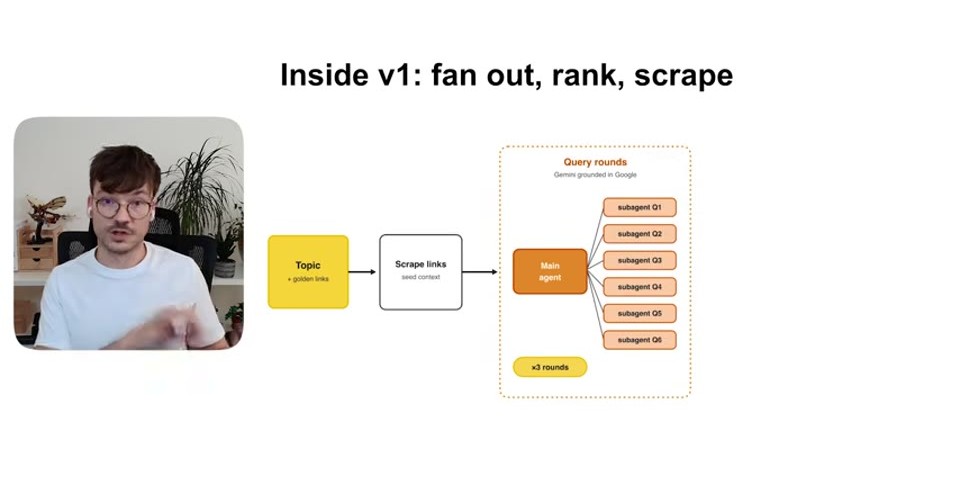
Every long agent session eventually breaks: the assistant that swore it would "never push to main" does exactly that forty turns later. The model didn't get dumber — its context did. This workshop is about engineering the context window so that stops happening, shown with Towards AI's open-source AI tutor, which answers questions for students of our AI-engineering courses. Context engineering is deciding what the model sees on every single call — instructions, history, retrieved course content, memory, and tool outputs — and it's the line between a tutor that holds a coherent session and one that forgets the student's setup halfway through. We'll move in three stages, mirroring how the project actually went. The concepts: the two root problems (a finite window, a stateless model), the full compaction toolkit (truncation, trimming, tool-result clearing, summarization, and offloading to files — and when each actually helps), memory that survives across sessions, skills loaded on demand, and production-grade retrieval (chunking, metadata, course scoping, hybrid search, reranking, and evaluating). We'll cover the tutor's architecture, and the evaluation harness we used to measure every run on Gemini — tokens, cost, latency, and memory probes instead of vibe-checks. At real volume, even Gemini Flash got expensive, so we tested whether open and local models could match the quality for a fraction of the cost and match result quality. Everything is open-source and will be shared during the workshop.
Media Evidence
Turn 10,994 Notes Into Memory - Paul Iusztin, Decoding AI & Louis-François Bouchard, Towards AI (speaker-match related prior/adjacent AI Engineer video; captions: English auto-captions).
- youtube I2cbIws9j10 transcript — full cached transcript markdown for the related YouTube source.
- Source video:
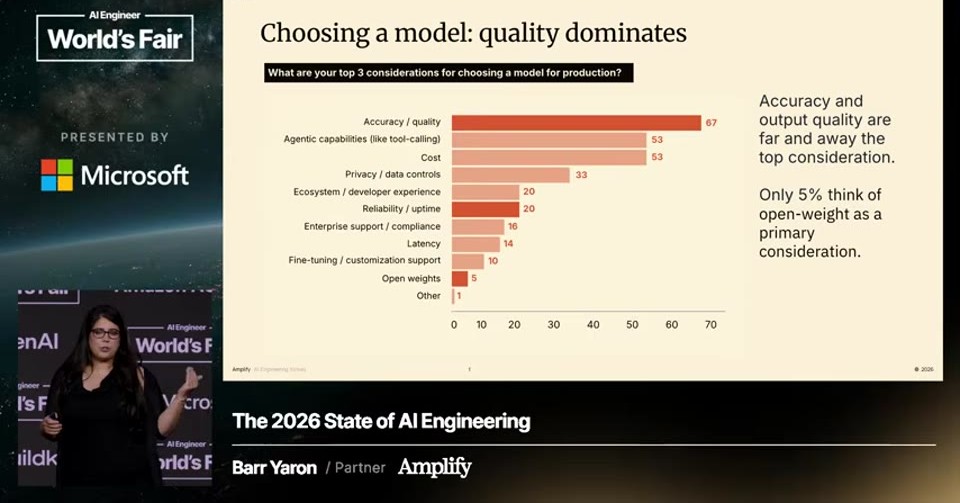
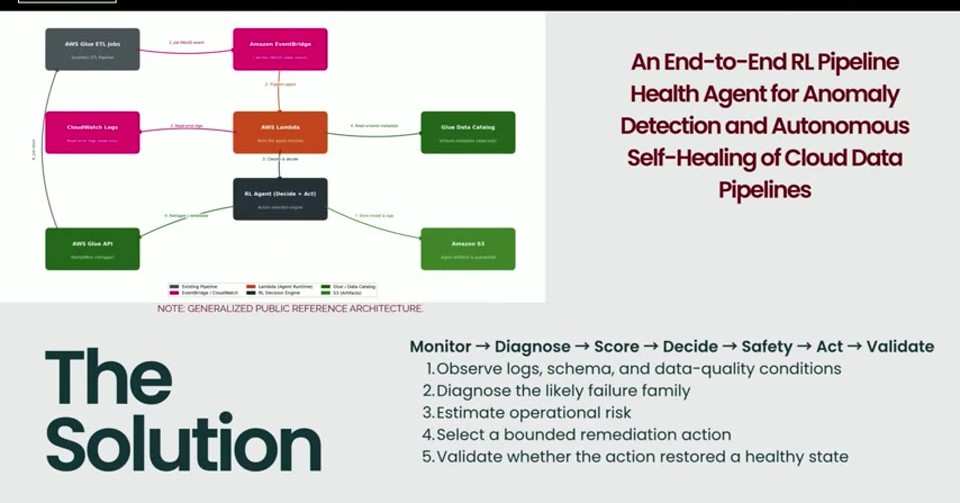
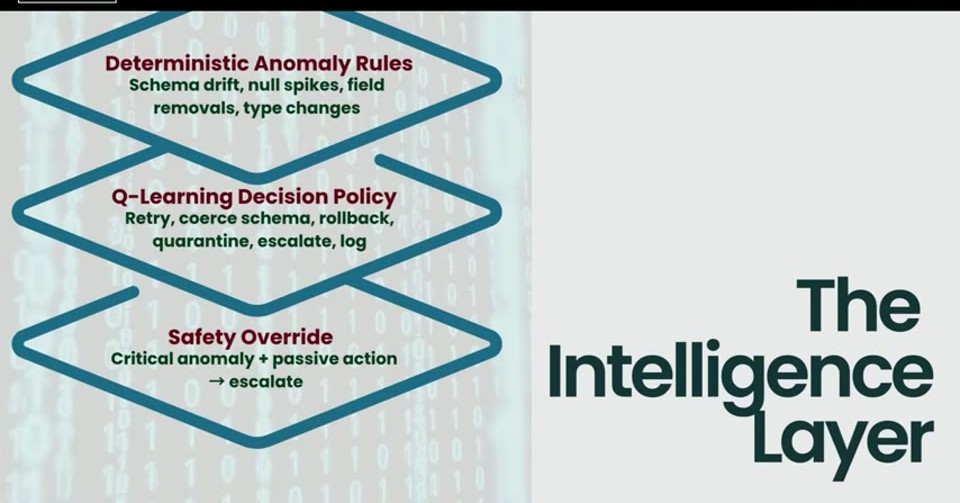
youtube-I2cbIws9j10 - Slide deck: Dense Slides: WF26: Harness Engineering & Startup Battlefield ft. Garry Tan, Mike Krieger, @t3dotgg , DSPy — 11 visible slide image(s); 11 HTML recreation(s).
- Additional slide evidence: Slides: WF26: Harness Engineering & Startup Battlefield ft. Garry Tan, Mike Krieger, @t3dotgg , DSPy
- Slide-derived themes for
youtube-I2cbIws9j10: context, window, selects, response, facts, retry, coerce, rollback. - Source video:
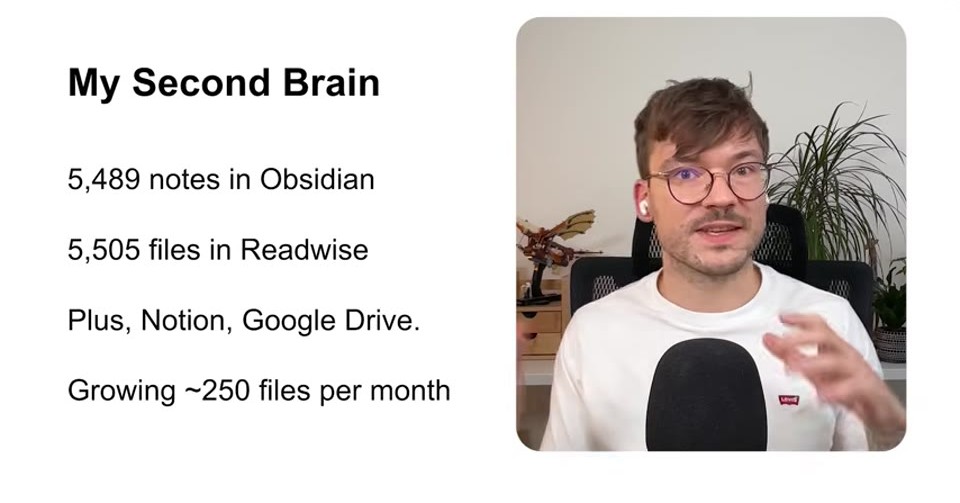
youtube-ZRM_TfEZcIo - Slide deck: Dense Slides: Turn 10,994 Notes Into Memory - Paul Iusztin, Decoding AI & Louis-François Bouchard, Towards AI — 10 visible slide image(s); 10 HTML recreation(s).
- Additional slide evidence: Slides: Turn 10,994 Notes Into Memory - Paul Iusztin, Decoding AI & Louis-François Bouchard, Towards AI, Reconstructed Slides: Turn 10,994 Notes Into Memory - Paul Iusztin, Decoding AI & Louis-François Bouchard, Towards AI
- Slide-derived themes for
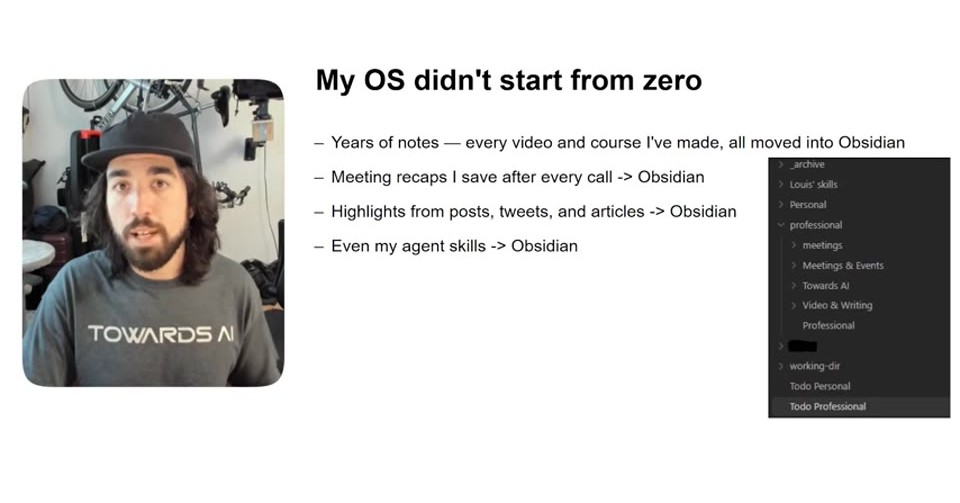
youtube-ZRM_TfEZcIo: obsidian, google, plus, notion, drive, growing, files, month.
Evidence Graph
This evidence graph is generated from currently linked source material: official schedule text, related video pages, cached transcripts, visible slide text, dense/reconstructed slide pages, and AI slide-classification audits.
Media Signals
youtube-I2cbIws9j10— 91,792 transcript words; 7 slide-derived text signals- Transcript signals for
youtube-I2cbIws9j10: code, model, back, system, well, first, today, even. - Slide-derived themes for
youtube-I2cbIws9j10: context, window, selects, response, facts, retry, coerce, rollback. - Evidence links for
youtube-I2cbIws9j10: youtube I2cbIws9j10, youtube I2cbIws9j10 transcript, youtube I2cbIws9j10 slides, youtube I2cbIws9j10 dense slides youtube-ZRM_TfEZcIo— 9 slide-derived text signals- Slide-derived themes for
youtube-ZRM_TfEZcIo: obsidian, google, plus, notion, drive, growing, files, month. - Evidence links for
youtube-ZRM_TfEZcIo: youtube ZRM_TfEZcIo, youtube ZRM_TfEZcIo slides, youtube ZRM_TfEZcIo dense slides, youtube ZRM_TfEZcIo reconstructed slides
Agent Reading Notes
Use these signals to refine the synopsis, topic links, people/company context, and method notes. If a source is a related external video rather than an exact official recording, keep it framed as supporting evidence.
Transcript Status
Related video transcript availability: English auto-captions. Treat this as supporting context, not a recording of this exact scheduled session unless later confirmed. Not fetched yet.
People
Supporting Slides
- youtube ZRM_TfEZcIo slides — extracted from the related public AI Engineer video.
Slide Evidence
- Slide-only cropped deck: youtube ZRM_TfEZcIo dense slides (12 viable slide images).
- Related slide/OCR pages:
- youtube ZRM_TfEZcIo dense slides
- youtube ZRM_TfEZcIo reconstructed slides
- youtube ZRM_TfEZcIo slides
- Slide-derived terms:
notes,obsidian,research,towards,index,every,database,files,engineer,handbook,content,courses,videos,starts,zero,codex,repos,course
Livestream Segment
- Watch in livestream at 02:11:16 — WF26: Harness Engineering & Startup Battlefield (Day 3).
- Match basis: speaker and title; timed captions matched Louis-François Bouchard, engineering.
- Confidence: high automated match; prefer a dedicated cut-video recording when one exists.
Attendance Visibility
No high-confidence attendance icon signal is shown for this talk. The sampled video evidence was either low confidence, source-proxy-only, or did not expose a clear audience view.
Synthesis
Synthesized Breakdown
Mhm. Mhm. Mhm. Ladies and gentlemen, welcome to the AI Engineer World's Fair.
Speaker And Company Context
- Louis-François Bouchard — CTO & Co-Founder at Towards AI.
- Samridhi Vaid — Senior Machine Learning Engineer at Towards AI.
- Omar Solano — AI Engineer at Towards AI.
Topics Covered
Derived Links And Source Material
- youtube I2cbIws9j10 transcript — transcript markdown; source cache
raw/sources/youtube-livestream-transcripts/I2cbIws9j10.txt(91,792 words). - youtube I2cbIws9j10 — related YouTube source page.
- youtube I2cbIws9j10 slides — slide evidence.
- youtube I2cbIws9j10 dense slides — slide evidence.
- youtube ZRM_TfEZcIo — related YouTube source page.
- youtube ZRM_TfEZcIo slides — slide evidence.
- youtube ZRM_TfEZcIo reconstructed slides — slide evidence.
- youtube ZRM_TfEZcIo dense slides — slide evidence.
Novel Concepts / Clever Methods
- Agent-Ready Accessibility — Designing for agents and designing for accessibility converge around explicit structure, reachable controls, and understandable state.
Evidence Boundary
This synthesis uses the official schedule plus cached video transcripts. Official AI Engineer World's Fair San Francisco 2026 livestreams and cut videos are primary event video sources for transcript/slide evidence; external, historical, or speaker-matched videos remain supporting context unless manually verified as exact official event recordings.