Build the Right Thing: Product Engineering for Software Developers — Part 2
Conference Context
- Date/time: 2026-06-29 · 1:15pm-2:15pm
- Track/room: Workshops Day 1 · Track 4
- Speaker(s): Kent C. Dodds
- Session type/status: sponsor · confirmed
- Track: Workshops Day 1
- Room: Track 4
- Session type: sponsor
- Status: confirmed
Session Description
There is nothing quite as demoralizing as finishing a feature and realizing you built the wrong thing. The code is clean. The tests pass. The ticket is closed. And none of it matters. This is happening more often, not less. AI makes it faster and cheaper to implement, which means teams can now waste entire sprints on the wrong idea at unprecedented speed. The bottleneck is no longer "can we build it?" It is "should we build it?" and "are we sure we understand the problem?" This session is a condensed introduction to product engineering for builders: the skills that sit upstream and downstream of implementation. We will not try to cover everything a full-day workshop would. Instead, we will focus on the highest-leverage ideas you can apply on Monday. ### What we'll cover 1. Validate before you build Most wrong builds start with an idea that was never tested. You will learn to separate real user pain from solution-shaped requests, and practice discovery questions that surface past behavior instead of hypothetical enthusiasm. 2. Prioritize what deserves to exist Not every good idea should be built now. Especially in the AI era, "we could build this" is not a reason to build it. We will work through a practical prioritization lens, including the Kano model, to help you distinguish fundamentals from delighters from distractions before your team commits. 3. Own the feature, not just the PR Product engineering does not end at merge. You will leave with a clearer picture of end-to-end feature ownership: staying close to users, setting up simple feedback loops, and improving what you shipped instead of moving on to the next ticket. ### Format This is a 2–3 hour session with Kent C. Dodds. Expect focused teaching, real-world examples, and short interactive exercises and discussion. This is not a full simulation lab or a ticket-closing coding workshop. It is judgment practice for engineers who already know how to ship. ### Who this is for Software engineers (and technical builders generally) who: - Have shipped something polished that nobody wanted - Feel pressure to move fast with AI and want a better filter for what deserves to exist - Want stronger product instincts without becoming a PM - Care about owning outcomes, not just closing tasks Some software engineering experience is assumed. No particular stack is required. PMs and designers often find this valuable too. ### What you'll leave with - Discovery questions for ambiguous work - A prioritization lens you can use before committing to a build - A clearer model for feature ownership and post-ship feedback loops - Language for stakeholder conversations when requirements are unclear
Media Evidence
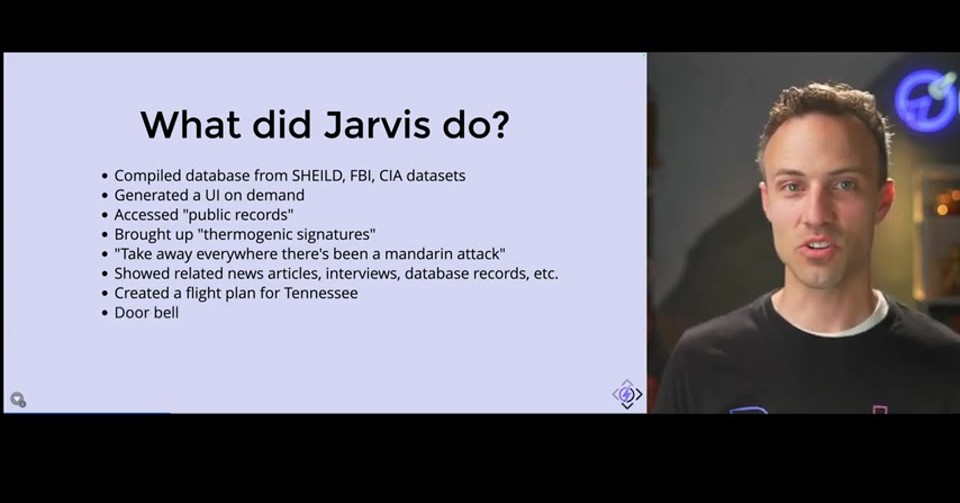
Letting AI Interface with your App with MCP — Kent C Dodds (speaker-match related prior/adjacent AI Engineer video; captions: English auto-captions).
- Source video:
youtube-EyZiAp0pelw - Slide deck: Dense Slides: Letting AI Interface with your App with MCP — Kent C Dodds — 1 visible slide image(s); 1 HTML recreation(s).
- Additional slide evidence: Slides: Letting AI Interface with your App with MCP — Kent C Dodds, Reconstructed Slides: Letting AI Interface with your App with MCP — Kent C Dodds
- Slide-derived themes for
youtube-EyZiAp0pelw: database, jarvis, compiled, brought, signatures, showed, related, news.
Evidence Graph
This evidence graph is generated from currently linked source material: official schedule text, related video pages, cached transcripts, visible slide text, dense/reconstructed slide pages, and AI slide-classification audits.
Media Signals
youtube-EyZiAp0pelw— 5 slide-derived text signals- Slide-derived themes for
youtube-EyZiAp0pelw: database, jarvis, compiled, brought, signatures, showed, related, news. - Evidence links for
youtube-EyZiAp0pelw: youtube EyZiAp0pelw, youtube EyZiAp0pelw slides, youtube EyZiAp0pelw dense slides, youtube EyZiAp0pelw reconstructed slides
Agent Reading Notes
Use these signals to refine the synopsis, topic links, people/company context, and method notes. If a source is a related external video rather than an exact official recording, keep it framed as supporting evidence.
Transcript Status
Related video transcript availability: English auto-captions. Treat this as supporting context, not a recording of this exact scheduled session unless later confirmed. Not fetched yet.
People
Supporting Slides
- youtube EyZiAp0pelw slides — extracted from the related public AI Engineer video.
Slide Evidence
- Slide-only cropped deck: youtube EyZiAp0pelw dense slides (1 viable slide images).
- Related slide/OCR pages:
- youtube EyZiAp0pelw dense slides
- youtube EyZiAp0pelw reconstructed slides
- youtube EyZiAp0pelw slides
- Slide-derived terms:
write,location,wake,yourbrainneedsthis,cess,etece,dovnldaoga/sec,veptrace,translation,archivi,bestclips,itgoing,kent,please,ajournalentry,forme,kentcdodds.com,aboutmy
Synthesis
Synthesized Breakdown
Build the Right Thing: Product Engineering for Software Developers — Part 2 ## Conference Context - Date/time: 2026-06-29 · 1:15pm-2:15pm - Track/room: Workshops Day 1 · Track 4 - Speaker(s): Kent C. Dodds - Session type/status: sponsor · confirmed - Track: Workshops Day 1 - Room: Track 4 - Session type: sponsor - Status: confirmed ## Session Description There is nothing quite as demoralizing as finishing a feature and realizing you built the wrong thing. The code is clean. The tests pass.
Speaker And Company Context
- Kent C. Dodds — Software Engineer and Educator at EpicProduct.engineer.
Topics Covered
Derived Links And Source Material
- youtube EyZiAp0pelw — related YouTube source page.
- youtube EyZiAp0pelw slides — slide evidence.
- youtube EyZiAp0pelw reconstructed slides — slide evidence.
- youtube EyZiAp0pelw dense slides — slide evidence.
Novel Concepts / Clever Methods
- No highlighted novel concept has been detected yet.
Evidence Boundary
This synthesis is based on the official schedule and linked source pages. It should be revisited when exact session recordings or transcript-backed secondary sources are available.